Maintaining a healthy credit score is an essential part of financial stability. It influences access to loans, interest rates, and even certain opportunities in both personal and professional life.
However, many individuals unknowingly engage in habits that gradually weaken their credit profile. These actions may seem minor in isolation, but over time, they can have a significant impact.
Understanding these habits is the first step toward making more informed financial decisions.
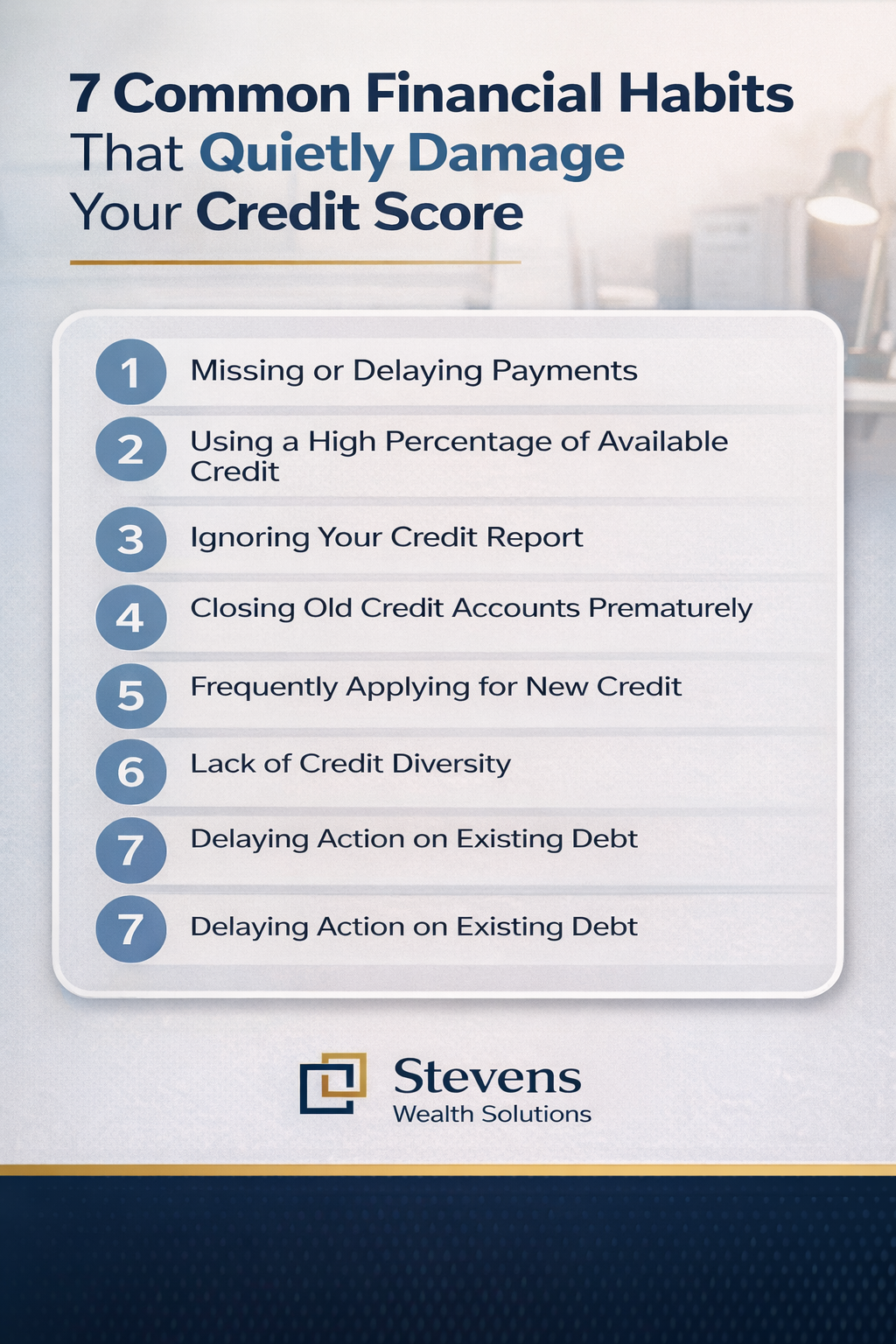
1. Missing or Delaying Payments
One of the most common factors affecting credit scores is payment history. Even a single missed or late payment can negatively impact your credit profile.Consistency in meeting financial obligations is crucial for maintaining a strong credit standing.
2. Using a High Percentage of Available Credit
Maxing out credit cards or consistently using a large portion of your available credit can signal financial strain. This is often referred to as high credit utilization.Maintaining a lower usage ratio demonstrates better financial management and positively influences your score.
3. Ignoring Your Credit Report
Many people only check their credit report when it becomes necessary. However, failing to review it regularly can allow errors or suspicious activity to go unnoticed.Regular monitoring helps ensure accuracy and enables early detection of potential issues.
4. Closing Old Credit Accounts Prematurely
While it may seem responsible to close unused accounts, doing so can reduce your overall credit history length and available credit.A longer credit history generally reflects stability and can positively impact your score.
5. Frequently Applying for New Credit
Submitting multiple credit applications within a short period can raise concerns for lenders. Each application may result in a hard inquiry, which can slightly reduce your score.It is advisable to apply for credit only when necessary and with clear intent.
6.Lack of Credit Diversity
Relying on only one type of credit account may limit your credit profile. A balanced mix—such as credit cards and installment loans—can demonstrate your ability to manage different forms of credit responsibly.
7. Delaying Action on Existing Debt
Ignoring outstanding balances or delaying repayment can lead to increased interest, penalties, and long-term damage to your credit score.Addressing debts proactively helps prevent escalation and supports financial recovery.
Conclusion
A strong credit score is not built overnight—it is shaped by consistent, informed financial behavior over time.
Often, it is not major financial mistakes that cause the most damage, but small, repeated habits that go unnoticed.
By becoming more aware of these patterns and making intentional adjustments, individuals can protect and improve their credit standing.
Stevens Wealth Solutions provides guidance and support to help individuals better understand their credit profile and take meaningful steps toward long-term financial stability.
Because when it comes to financial health, informed decisions make all the difference.