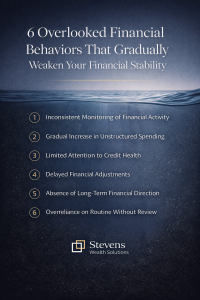
Financial stability is often associated with major decisions — investments, income levels, or large expenses. However, in many cases, it is not the obvious choices that create challenges, but the small, everyday financial habits that go unnoticed over time.
These seemingly minor patterns can gradually lead to long-term consequences if left unaddressed.
Understanding them is an important step toward making more informed financial decisions.
1. Living Without a Clear Financial Plan
Many individuals manage their finances on a day-to-day basis without a defined structure. While this may seem manageable in the short term, the absence of a clear plan can lead to inconsistent spending and limited progress over time.
2. Overlooking the Importance of Credit Health
Credit is often only considered when it becomes necessary. Ignoring credit reports, scores, and related activities can result in missed errors or unnoticed issues that may affect future financial opportunities.
3. Relying Solely on Income Without Strategy
Earning income is important, but without proper management and planning, it does not always translate into financial stability. Sustainable progress requires intentional decision-making, not just increased earnings.
4. Delaying Financial Decisions
Postponing important financial action; whether reviewing accounts, addressing debts, or seeking guidance can lead to compounded challenges over time. Early action often prevents larger issues.
5. Underestimating Small, Repeated ExpensesFrequent, low-value spending may appear insignificant individually, but over time, these expenses accumulate and can impact overall financial health more than expected.
Conclusion
Financial challenges are not always the result of major mistakes. More often, they develop gradually through habits that seem harmless at first. By becoming more aware of these patterns and making intentional adjustments, individuals can take meaningful steps toward greater financial stability.
Stevens Wealth Solutions provides guidance and support to help individuals better understand their financial position and make informed decisions for long-term growth because when it comes to finances, small changes can lead to significant results.