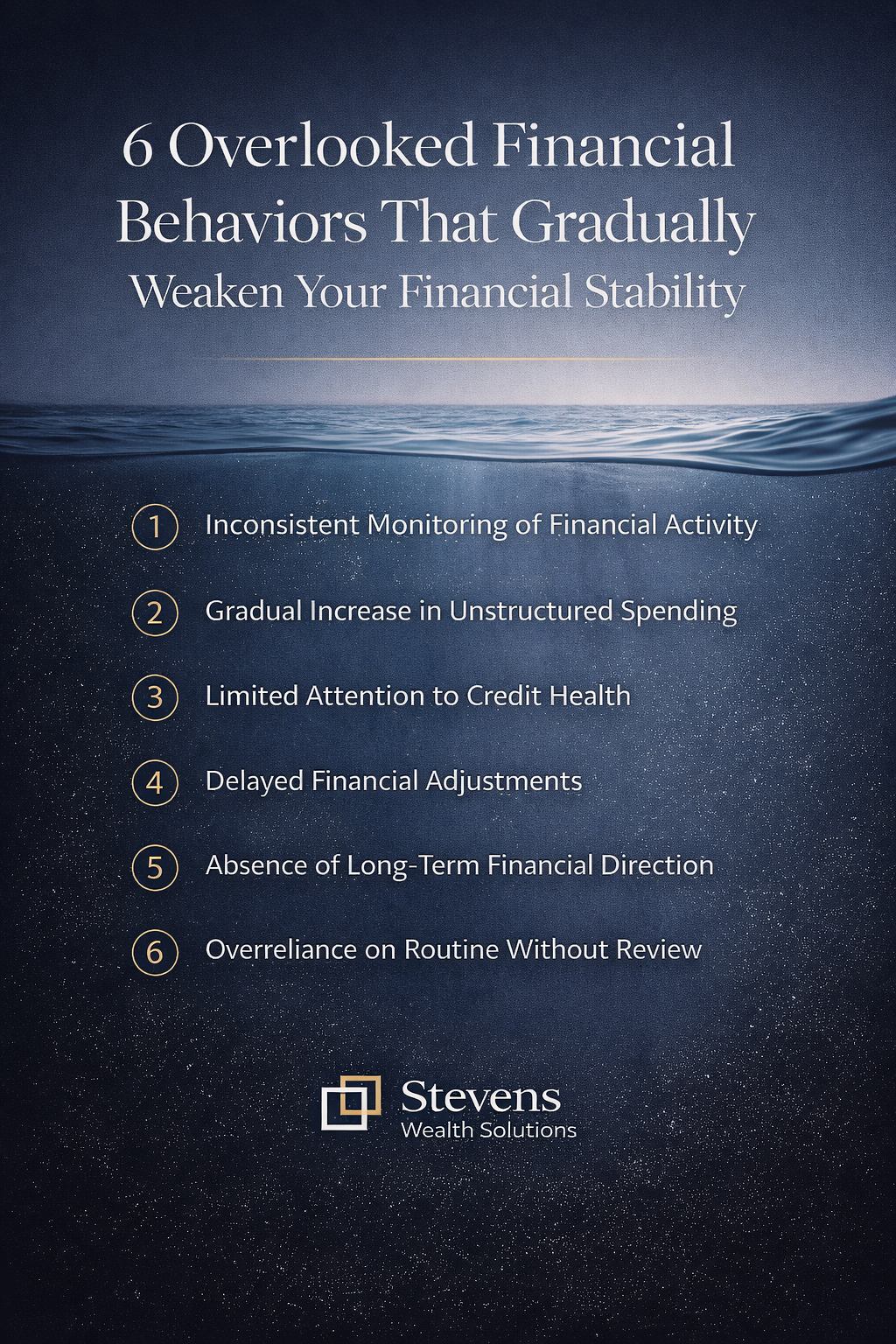
Financial stability is often associated with major decisions. However, in many cases, it is shaped by small, repeated behaviors that go unnoticed over time.
These patterns may seem insignificant individually, but their long-term impact can be substantial.
Understanding them is essential for maintaining a strong financial position.
1. Inconsistent Monitoring of Financial Activity
Failing to regularly review accounts and financial statements can lead to missed errors, unnoticed charges, and reduced financial awareness over time.
2. Gradual Increase in Unstructured Spending
Small increases in daily or lifestyle expenses can accumulate without clear intention, reducing the ability to save or plan effectively.
3. Limited Attention to Credit Health
Neglecting credit reports, scores, and related activities can result in unnoticed issues that may affect future financial opportunities.
4. Delayed Financial Adjustments
Recognizing financial issues without taking timely action can allow minor concerns to develop into more significant challenges.
5. Absence of Long-Term Financial Direction
Operating without clear financial goals or structure can lead to decision-making that lacks consistency and long-term impact.
6. Overreliance on Routine Without Review
Continuing financial habits without periodic evaluation can prevent necessary adjustments and limit overall progress.
Conclusion
Financial stability is rarely affected by a single action. More often, it is shaped by patterns; small, consistent behaviors that either strengthen or weaken financial outcomes over time. By becoming more aware of these behaviors and making intentional adjustments, individuals can better position themselves for long-term stability.
Stevens Wealth Solutions provides guidance to help individuals understand their financial patterns and make informed decisions that support sustainable growth because in finance,what is overlooked often matters the most.