WHY FINANCIAL DECISIONS ARE MORE EMOTIONAL THAN YOU THINK
When people think about money, they often assume financial decisions are based on logic.
In reality, emotions play a much bigger role than many people realize.
Fear can stop someone from investing.
Excitement can lead to impulsive spending.
Stress can make budgeting feel overwhelming.
And the desire to “keep up” with others can encourage unnecessary purchases that don’t support long-term financial goals.
This is why financial literacy is about more than understanding numbers.
It is also about understanding the emotions and habits that influence how we manage money.
Strong financial decisions are rarely made in the heat of the moment.
They are built on planning, patience, and a clear understanding of your financial goals.
Developing healthy money management habits can help you:
• Spend with purpose instead of impulse.
• Build savings consistently.
• Make informed financial decisions.
• Reduce financial stress.
• Stay focused on long-term financial stability and wealth building.
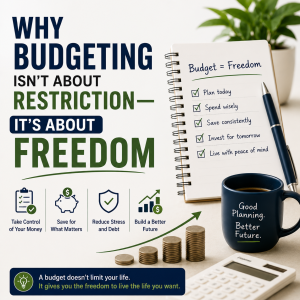
Financial planning is not just about creating a budget.
It is about creating a system that helps you make confident decisions, even when emotions are involved.
The more aware you become of your financial habits, the easier it becomes to separate temporary feelings from long-term financial priorities.
Financial success is not determined by income alone.
It is also shaped by the decisions you make every day—and the mindset behind those decisions.
Because when you learn to manage your emotions, you’re often better equipped to manage your money.
Have you ever made a financial decision based on emotion rather than careful planning? What did you learn from the experience?