Financial decisions are made every day; often with confidence and the assumption that all relevant factors have been considered. However, not all financial challenges arise from poor decisions.In many cases, they result from what is not seen.
These are financial blind spots; areas that are often overlooked, yet have a significant influence on outcomes over time. Recognizing them is essential for making more informed and effective decisions.
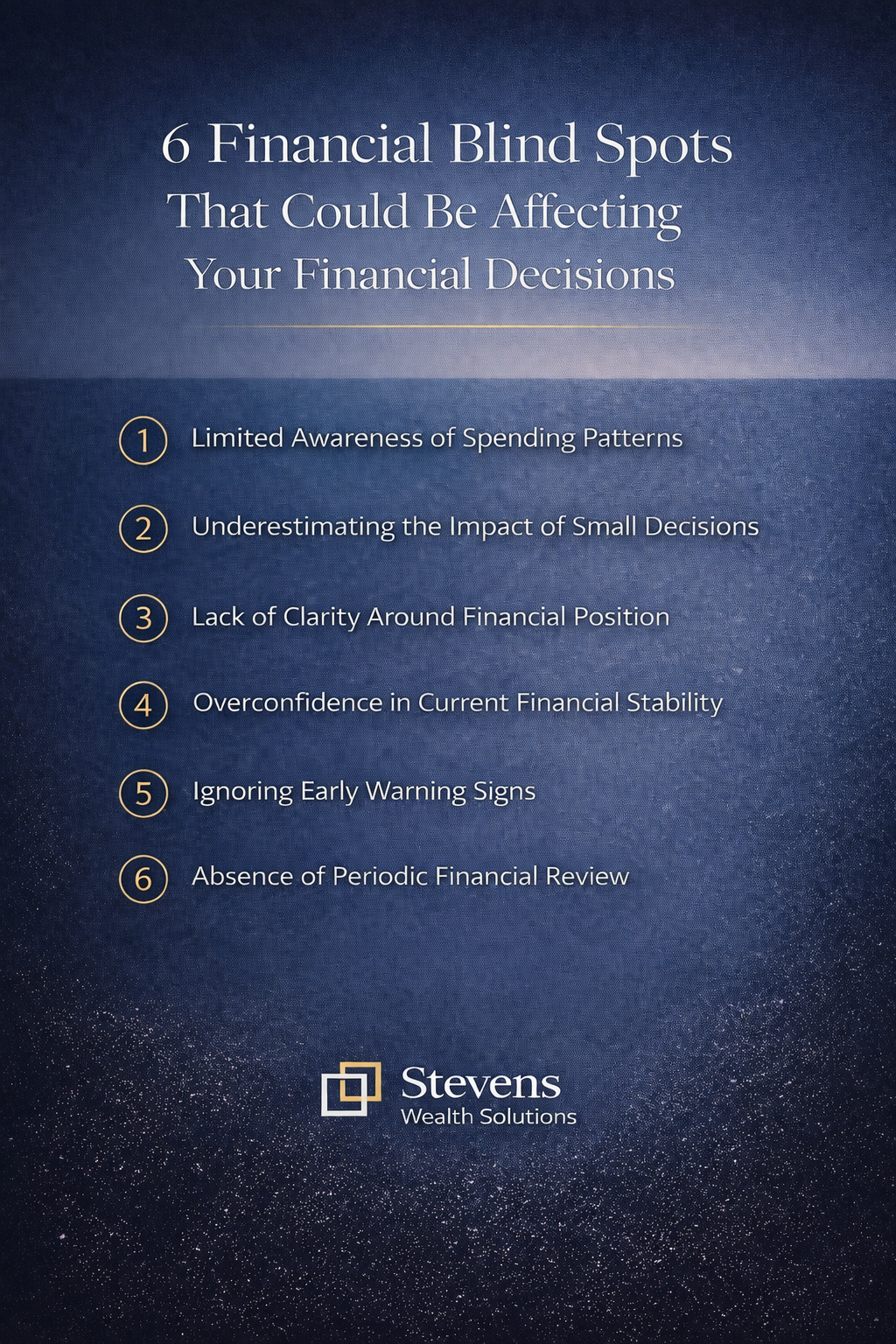
1. Limited Awareness of Spending Patterns
Without a clear understanding of how money is consistently spent, it becomes difficult to identify inefficiencies or areas that require adjustment.
2. Underestimating the Impact of Small Decisions
Seemingly minor financial choices, when repeated over time, can accumulate and influence long-term outcomes more than expected.
3. Lack of Clarity Around Financial Position
Operating without a full understanding of one’s financial standing can lead to decisions that are not aligned with reality.
4. Overconfidence in Current Financial Stability
Assuming stability without deeper evaluation can create a false sense of security, limiting proactive financial planning.
5. Ignoring Early Warning Signs
Unusual financial patterns, small inconsistencies, or minor issues are often dismissed, allowing them to develop into more significant concerns.
6. Absence of Periodic Financial Review
Without regular evaluation, financial decisions may continue based on outdated assumptions rather than current realities.
Conclusion
Financial outcomes are not shaped by decisions alone, but by the awareness behind those decisions. Blind spots, when left unaddressed, can quietly influence financial direction and limit progress. By developing greater clarity and regularly reviewing financial patterns, individuals can make more informed choices and strengthen their financial position over time.
Stevens Wealth Solutions supports individuals in identifying these gaps and making decisions grounded in clarity, structure, and long-term understanding because sometimes, the most important factor in financial decision-making… is what you may not be seeing.